Resume Photo or No Resume Photo? When a Headshot Helps

Introduction
Should you add a resume photo? For most applications in the United States, Canada, the UK, Ireland, and Australia, the safe answer is no. In these markets, a resume photo can trigger unconscious-bias concerns, and many employers use applicant tracking systems that handle photo-heavy files poorly. In much of continental Europe, parts of Asia, Latin America, and the Middle East, a clean CV photo is expected and its absence looks incomplete.
So the real question is not whether a professional resume headshot is universally good or bad. It is whether your target market, industry, and role expect one. This guide gives you a clear decision framework, country-by-country norms, and practical steps to prepare a polished photo when the context calls for one, without looking overdone.
If a photo is expected where you are applying, it needs to look intentional and current. A blurry vacation crop hurts more than no photo at all.
Key Takeaways
- Default to no photo for US, UK, Canadian, Irish, and Australian applications unless a role specifically requests one.
- Include a CV photo when applying in Germany, France, much of Europe, and many Asian, Latin American, and Middle Eastern markets where it is the norm.
- Match the channel: LinkedIn and personal websites benefit from a headshot everywhere, even when your resume file does not.
- When you do use a photo, keep it a plain, professional headshot: neutral background, business attire, and a natural expression.
Resume Photo Requirements by Market
Resume-photo expectations are shaped by local hiring law and culture, not by personal preference. Getting this wrong can quietly cost you interviews, so start by figuring out where the job actually sits.
In the United States, employment guidance from the U.S. Equal Employment Opportunity Commission pushes employers to avoid collecting information that could enable discrimination based on protected characteristics. Many US recruiters are trained to discard resumes with photos to reduce legal exposure. That is why the default in anglophone markets leans strongly toward no photo.
In photo-expecting markets, the norm is the opposite. A professional resume headshot signals attention to detail and completeness. Here is a simplified map of common expectations:
| Market | Resume/CV Photo Norm | Recommendation |
|---|---|---|
| United States, Canada | Discouraged | Skip the photo unless requested |
| United Kingdom, Ireland | Discouraged | Skip the photo |
| Australia, New Zealand | Discouraged | Skip the photo |
| Germany, Austria, Switzerland | Common, often expected | Include a professional photo |
| France, Spain, Italy | Common | Include a clean, neutral photo |
| Many parts of Asia, Latin America, Middle East | Often expected | Include a professional photo |
Two exceptions cut across all markets. Client-facing and personal-brand roles, such as real estate, acting, modeling, and some sales positions, often welcome a photo because appearance is part of the job. Company culture matters too: a creative agency may be more relaxed than a conservative bank in the same city.
AI Headshot Strategy for Job Seekers
Whether or not your resume file carries a photo, most job seekers still need one polished headshot for LinkedIn, personal sites, and applications in photo-expecting markets. Booking a studio session for a single square image is often more than the moment requires, so an AI-generated professional headshot has become a practical option for job seekers on a timeline.
The strategy is simple: create one clean, versatile headshot you can reuse across channels. You want an image that looks like a real, current photo of you, dressed for the roles you are targeting, on a neutral background. That single asset then works for your LinkedIn profile, an email signature, a portfolio site, and a CV photo when the destination market expects one.
For roles that sit under a general professional or business umbrella, review the styling standards in this guide to business headshot options so your photo matches interviewer expectations rather than social-media trends. The goal is credibility, not personality-driven flair.
A few strategy rules keep your headshot resume-safe:
- Dress for the target role, not your current one. If you are moving up a level, present at that level.
- Keep it timeless. Avoid heavy filters, unusual crops, or trendy color grading that will date quickly.
- Stay honest. Your headshot should look like the person who shows up to the interview. Overly retouched images create a credibility gap.
- Reuse one look. A consistent photo across LinkedIn and your resume builds recognition with recruiters reviewing both.
If you want a broader view of when generated headshots earn their place, our comparison of AI headshots vs a professional photographer breaks down the tradeoffs by budget and turnaround.
Create Professional Headshots in Minutes
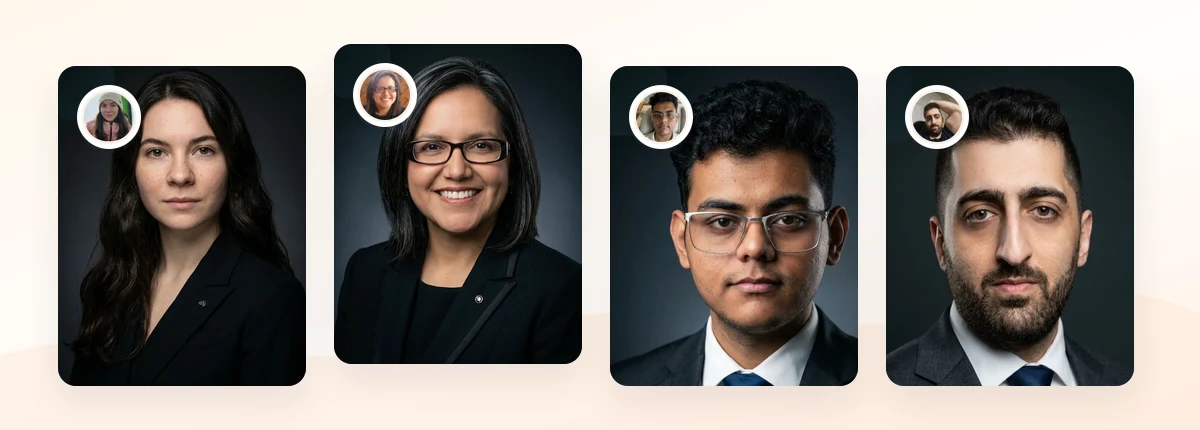
Upload 5-20 everyday photos and get 40-100 polished AI headshots for LinkedIn, resumes, company pages, and executive bios.
15-30 minute delivery • Full commercial rights • One-time payment
Get My Headshots →What Works for a Resume Headshot

When a photo is expected, restraint is the guiding principle. A resume headshot should read as professional and neutral, letting your qualifications stay the focus. The best CV photos share the same quiet, competent look.
Framing and background. Use a head-and-shoulders crop with a plain background in white, light gray, or a soft neutral tone. If you want to weigh background choices in more depth, our guide to headshot backgrounds covers when white, gray, or office settings work best. For CV photos, simpler is almost always safer.
Attire. Match the formality of your target industry. A blazer, collared shirt, or a clean knit reads as professional in most fields. When in doubt, dress one notch above the everyday office standard for the role.
Expression. Aim for approachable and calm. A relaxed, closed-mouth smile or a light natural smile works across cultures. You want to look like a colleague people would trust in a meeting.
Lighting and quality. Even, soft lighting with no harsh shadows. The image should be sharp, well-exposed, and high-resolution enough to stay crisp on the page. A grainy or dim photo undercuts an otherwise strong application.
| Element | What works |
|---|---|
| Crop | Head and shoulders, centered |
| Background | White, light gray, soft neutral |
| Attire | Business or business-casual for the target role |
| Expression | Calm, approachable, natural smile |
| Lighting | Soft, even, no harsh shadows |
What to Avoid on a Resume Photo
Most resume-photo mistakes come from treating the image like a social post rather than a professional document. In a market where photos are expected, these missteps stand out for the wrong reasons.
- Casual or cropped snapshots. Selfies, vacation photos, and images with a stray arm or shoulder cropped out signal a lack of effort.
- Busy or distracting backgrounds. Kitchens, cars, party scenes, and cluttered rooms pull attention away from you.
- Heavy filters or over-retouching. Smoothed skin and aggressive editing create a mismatch between your photo and the person interviewers meet.
- Sunglasses, hats, or obscured faces. Anything that hides your eyes or expression works against the point of a photo.
- Outdated images. A photo from a decade ago can read as evasive. Keep it current.
- Adding a photo where it is discouraged. In the US, UK, and similar markets, including a photo can get your resume filtered out. When in doubt, leave it off.
One more caution on format: some applicant tracking systems struggle to parse resumes with embedded images, which can scramble how your text is read. If a market expects a photo, keep the file clean and test that the text still parses.
Step-by-Step: Preparing Your Resume Headshot

Here is a practical sequence to decide on and produce a resume photo that fits your target market.
- Confirm the market norm. Identify where the role is based and check whether a CV photo is standard there. Default to no photo for US, UK, Canadian, Irish, and Australian applications.
- Check the job posting. Some employers explicitly request or discourage photos. Follow the instructions when they exist.
- Decide on one versatile headshot. Even if your resume skips the photo, plan for a strong LinkedIn and personal-site image. Our LinkedIn headshot guide walks through what recruiters expect on that channel.
- Gather quality source photos. If you are generating a headshot, use several clear, well-lit images of your face. Our tips on taking source photos at home help you avoid common input mistakes.
- Choose attire and background. Dress for the target role, pick a neutral background, and keep styling simple.
- Generate or select the final image. Aim for a natural, current look. Review it critically: does it look like you on a good, ordinary workday?
- Format correctly. If including a photo, place it in the top corner, keep it small and tasteful, and confirm the file still parses cleanly in a plain-text preview.
- Reuse consistently. Use the same headshot on LinkedIn, your resume where appropriate, and your email signature so recruiters recognize you across touchpoints.
Create Professional Headshots in Minutes
Upload 5-20 everyday photos and get 40-100 polished AI headshots for LinkedIn, resumes, company pages, and executive bios.
15-30 minute delivery • Full commercial rights • One-time payment
Get My Headshots →Related guides: For next steps, use Model Headshots: When You Need a Clean Portfolio Portrait and Should You Put a Photo on Your Resume? (US vs International Rules) to connect this advice with the rest of your professional headshot plan.
Final Thoughts
The resume photo decision comes down to context, not preference. In US, UK, Canadian, Irish, and Australian markets, skip the photo on your resume and let your experience lead. In Germany, France, and many markets across Europe, Asia, Latin America, and the Middle East, a clean professional resume headshot is expected and its absence looks incomplete.
Wherever you apply, one polished, current headshot still earns its place on LinkedIn and your personal site. Start by confirming your target market's norm, gather a few clear source photos, and choose a neutral, professional style that fits the roles you want. When the destination calls for a photo, a well-prepared headshot signals care. When it does not, leaving it off is the smarter move.
Frequently Asked Questions
Common questions about adding a photo to your resume or CV.