Actor Headshots vs Business Headshots: What Actually Changes?
Introduction
Actor headshots and business headshots look similar at a glance, but they are built for different jobs. Actor headshots exist to help casting directors picture you in a role, so they lead with personality, an expressive gaze, and a tight crop on the face. Business headshots exist to signal credibility and approachability on LinkedIn, resumes, and company pages, so they lean cleaner, calmer, and more polished.
If you are choosing between the two, the fastest way to decide is to name where the photo will actually live: a casting profile and reel, or a professional network and hiring pipeline. That single answer changes your expression, wardrobe, background, and framing. This guide breaks down every difference with a comparison table, deep dives on each style, and clear rules for when to choose which.
Quick Comparison Table
Here is the short version. Actor headshots prioritize castability and raw expression. Business headshots prioritize trust and consistency. Use this table as your decision anchor, then read the deep dives below for the reasoning.
| Attribute | Actor Headshots | Business Headshots |
|---|---|---|
| Expression | Open, expressive, character-driven eyes | Confident, calm, approachable smile |
| Crop | Tight, chest-up to face-focused | Head and shoulders, more breathing room |
| Wardrobe | Simple, solid, non-distracting; suggests a type | Role-appropriate business or smart-casual attire |
| Background | Neutral, often textured or muted, keeps focus on face | Clean studio, gray, white, or subtle office |
| Use case | Casting sites, agents, auditions, reels | LinkedIn, resume, company site, speaker bio |
| Best-fit reader | Actors and performers | Job seekers and professionals |
Actor Headshots: In-Depth Look

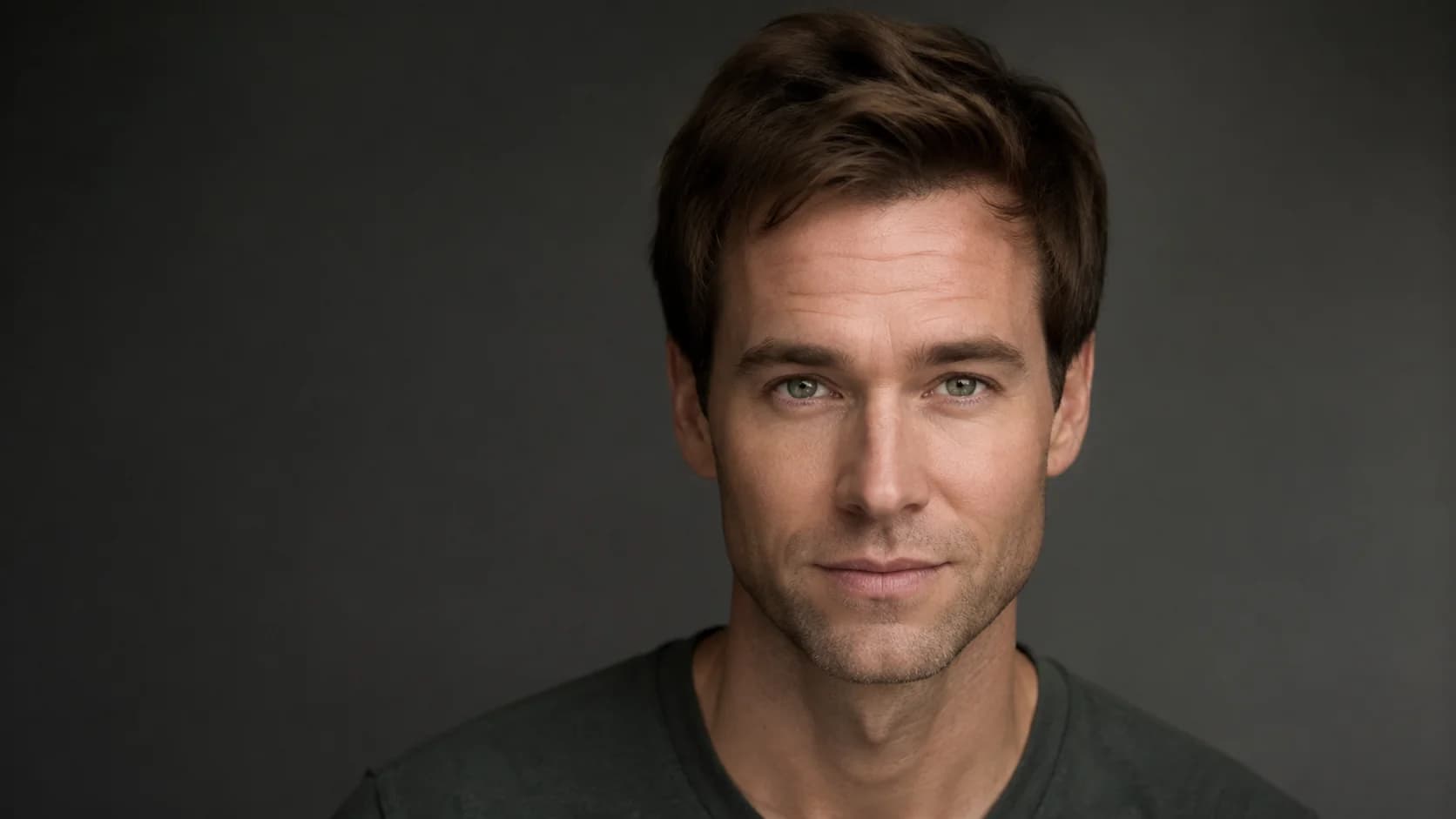
An actor headshot is a casting tool first and a portrait second. Its job is to make a casting director or agent instantly imagine you in a scene. That means the photo has to feel like you on a real day, not a corporate version of you. Industry casting guidance from resources like Backstage consistently favors authentic expression and connected eyes over polish.
Key traits of strong actor headshots:
- Expression leads everything. The eyes should feel alive and reactive, as if you are mid-thought. Casting is buying a person, not a pose.
- Tight, face-forward crop. Actor shots frame close so the face fills the frame. Detail in the eyes matters more than environment.
- Wardrobe suggests a type. A simple crew-neck reads differently than a blazer. Solids in muted tones keep attention on your face while hinting at the roles you fit.
- Minimal, non-competing background. Neutral or softly textured backdrops keep the focus locked on expression.
- Natural, retouch-light finish. Over-smoothed skin works against you; casting wants to see the real face they will meet in the room.
Actors often need more than one look: a warm commercial smile and a grounded dramatic frame, because different submissions call for different energy. If you want a style reference tuned for casting profiles, review examples in this guide to actor headshots before you shoot.
Create Professional Headshots in Minutes
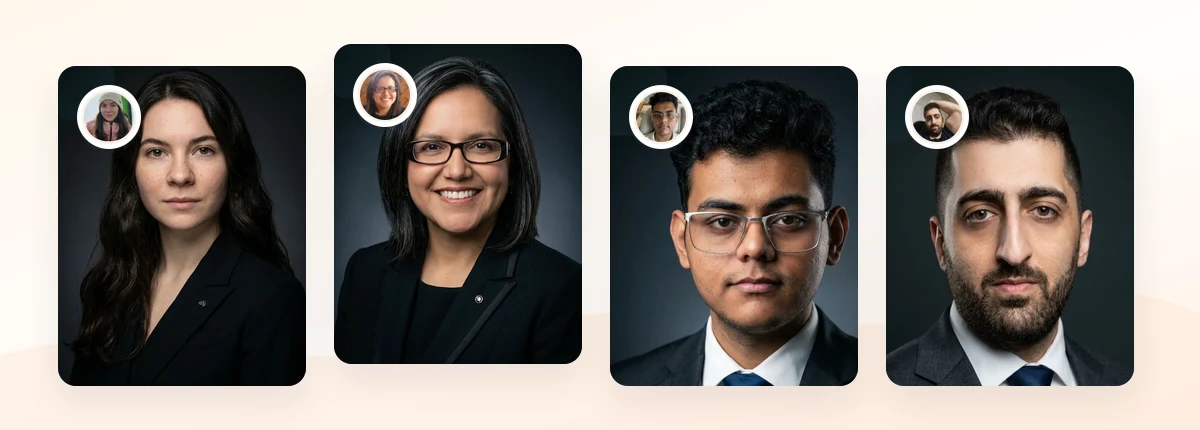
Upload 5-20 everyday photos and get 40-100 polished AI headshots for LinkedIn, resumes, company pages, and executive bios.
15-30 minute delivery • Full commercial rights • One-time payment
Get My Headshots →Business Headshots: In-Depth Look

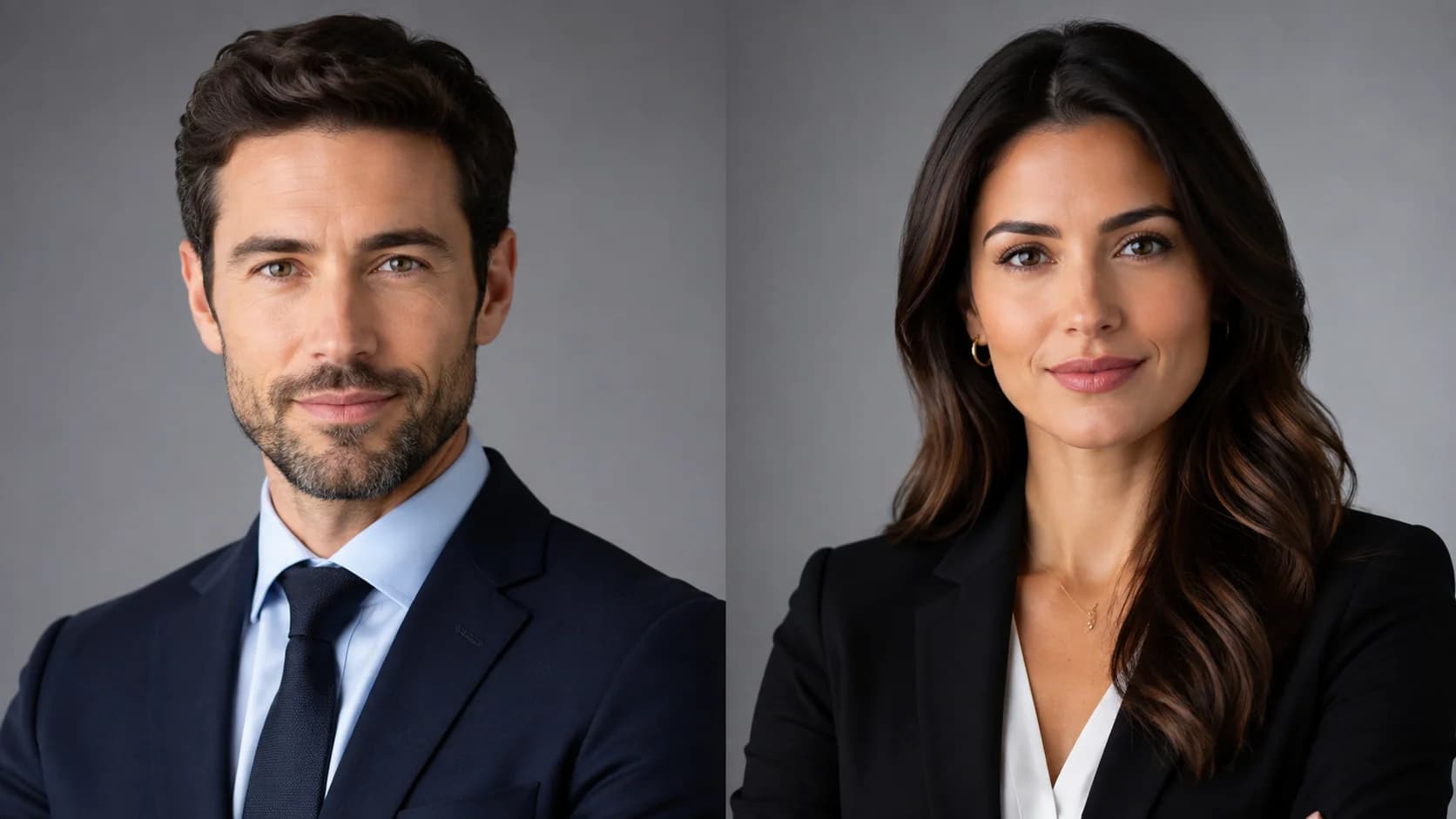
A business headshot answers a different question: can a recruiter, client, or colleague trust you at a glance? Its job is to make you look competent, current, and approachable before anyone reads a word. That shifts the priorities away from raw character and toward polish and consistency.
Key traits of strong business headshots:
- Approachable confidence. A genuine, easy smile or a steady, warm expression works better than an intense or dramatic look.
- Head-and-shoulders crop. Slightly wider framing gives room for shoulders and posture, which reads as composed and professional.
- Role-appropriate wardrobe. Match your industry: a blazer for finance or law, smart-casual for tech or creative fields. Our guide on what to wear for professional headshots covers this by role.
- Clean, controlled background. White, gray, or a softly blurred office keeps the image tidy across platforms. See options in our headshot backgrounds guide.
- Consistent, credible retouching. Light, natural correction, not a glamour edit.
Business headshots also value repeatability. Teams often need everyone photographed in the same style, and individuals reuse one strong frame across LinkedIn, email signatures, and slide decks. LinkedIn's own profile photo guidance recommends a clear, recent, professional image where your face fills most of the frame.
Key Differences
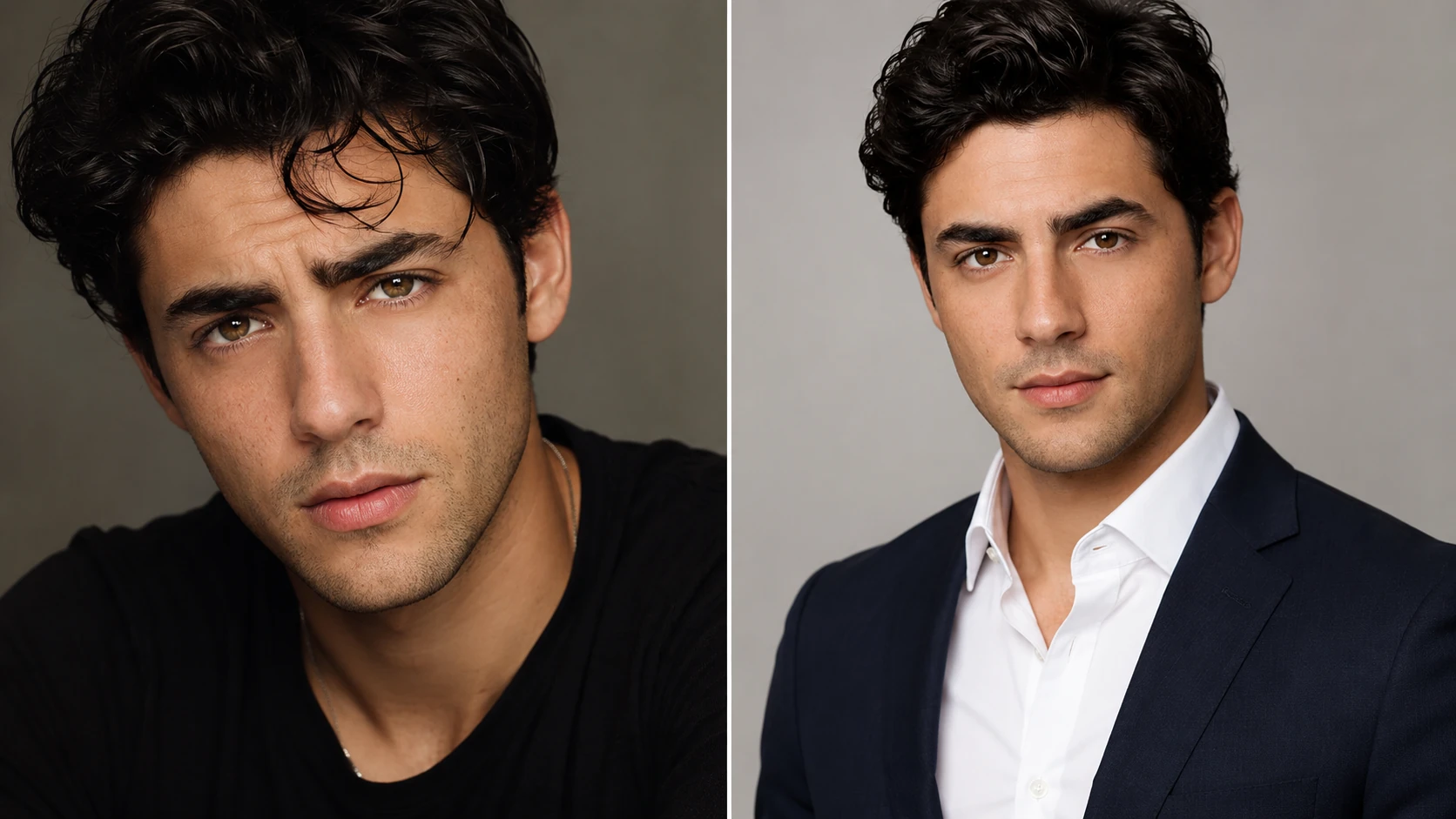
Both photos put your face front and center, but the intent behind each shapes every creative choice. Here is what actually changes when you switch from one to the other.
Goal. Actor headshots sell castability, the ability to be believed in a role. Business headshots sell trust, the sense that you are reliable and current. That difference drives everything downstream.
Expression. Actor shots reward a wider emotional range and a more open, unguarded look. Business shots reward a controlled, friendly confidence. The same person can nail both, but not usually in the same frame.
Framing and finish. Actor crops go tighter and keep retouching minimal so the real face shows. Business crops sit a touch wider and accept a cleaner, more even finish that still looks natural.
Wardrobe logic. Actors dress to suggest a type without locking into one costume. Professionals dress to match their field so the photo fits how they present at work.
Reuse. A business headshot is meant to travel across many platforms unchanged. Actors often maintain a small set of distinct looks for different submission categories.
When to Choose Each Option
Match the style to where the photo will live, not to which one looks more impressive in isolation.
Choose actor headshots when:
- You submit to casting sites, agents, or auditions and need character to read instantly.
- You want expression and eye connection to carry the frame.
- You need multiple looks (commercial vs dramatic) for different submission types.
Choose business headshots when:
- Your photo will anchor LinkedIn, a resume, a company page, or a speaker bio.
- You want a single, reusable image that signals credibility across platforms.
- You are part of a team that needs a consistent look.
Who should avoid actor-style headshots: if you are a job seeker or corporate professional, an intense, tightly cropped dramatic shot can read as off-brand or theatrical on LinkedIn. Recruiters generally expect approachable, standard professional framing.
Who should avoid business-style headshots: if you are submitting to casting, an overly polished corporate frame can feel generic and hide the personality casting wants to see. Performers often need something more raw and expressive.
Create Professional Headshots in Minutes
Upload 5-20 everyday photos and get 40-100 polished AI headshots for LinkedIn, resumes, company pages, and executive bios.
15-30 minute delivery • Full commercial rights • One-time payment
Get My Headshots →Our Recommendation
There is no universal winner. The right choice depends on where your photo works hardest. If your income and opportunities flow through casting, prioritize actor headshots and their expressive, character-first approach. If your opportunities flow through hiring, clients, or colleagues, prioritize business headshots that lead with polished credibility.
The tradeoff is focus. A great actor headshot may look too theatrical on LinkedIn, and a great business headshot may look too safe for a casting profile. Trying to make one image do both usually weakens both. If you genuinely need both, produce them as separate sets rather than compromising in the middle.
For most readers landing here from a professional context, a clean business headshot delivers the widest return. For performers, invest in a distinct casting look, and consider a couple of variations so different submissions get the right energy.
Conclusion
Actor headshots and business headshots are close cousins, not twins. Actor headshots put castability and raw expression first, with tight crops and type-suggesting wardrobe. Business headshots put trust and consistency first, with cleaner framing, role-appropriate attire, and a reusable finish. Deciding is simple once you name where the photo will live.
Start by gathering a few clear, well-lit source photos and choosing the style that matches your channel, casting or professional. Then keep the two goals separate so each image does its job well. When you are ready to create polished, natural-looking results without booking a studio, use the CTA block above to get started.
Related guide: For a more focused next step, read Acting Headshots: What Casting Directors Actually Look For and connect this advice to your wider professional headshot plan.
FAQ
Common questions about actor headshots versus business headshots.