Acting Headshots: What Casting Directors Actually Look For

Introduction
Acting headshots exist to do one job: get you seen the way you actually book. A casting director scans dozens of thumbnails before reading a single credit, so your photo has to communicate a castable type, an honest likeness, and a clear expression in under a second. Unlike a corporate portrait, an acting headshot is not about looking impressive. It is about looking like someone who can be cast in a specific kind of role and then showing up to the audition matching that photo.
This guide breaks down what casting directors and agents actually look for, how commercial and theatrical headshots differ, where framing and retouching lines are drawn, and how to prepare submission-ready photos. If you are building a first set or refreshing an outdated one, the goal is simple: a natural, current, expressive image that reads instantly and never surprises the person who called you in.
Key Takeaways
- Likeness beats glamour. Your headshot must match how you look walking into the room today, not a heavily edited or aspirational version.
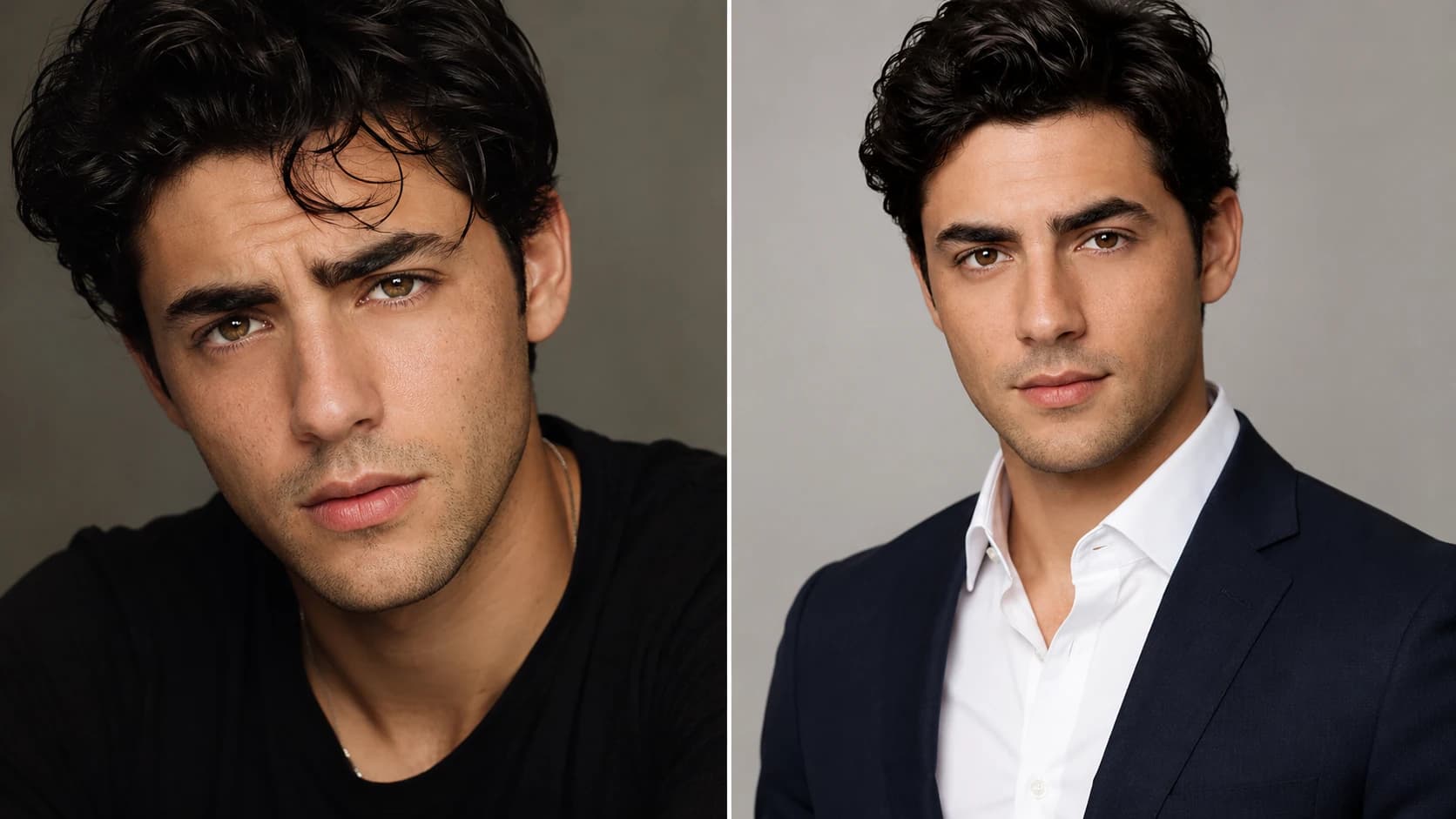
- Commercial and theatrical are different tools. Commercial reads bright, warm, and approachable; theatrical reads grounded, dimensional, and character-driven.
- Framing is tight and eye-focused. Most acting headshots are chest-up or shoulders-up with sharp, engaged eyes and a clean background.
- Retouching stays minimal. Casting expects light cleanup only, never reshaped features or removed permanent characteristics.
Acting Headshot Requirements
Acting headshots follow industry conventions that differ sharply from business or social portraits. The photo is a casting tool, so it is judged against submission standards on platforms like Actors Access and Casting Networks, and against the expectations of agents who represent you. The core rule across the industry is honesty: your headshot should let a casting director predict exactly who walks through the door.
Standard specs are consistent across most submission platforms. Backstage's industry guidance recommends a color image, roughly 8x10 in print or a high-resolution vertical crop online, framed from the chest or shoulders up with the eyes positioned in the upper third of the frame (Backstage headshot guidance).
Here is what casting typically expects:
| Element | Industry standard |
|---|---|
| Orientation | Vertical portrait, chest-up or shoulders-up |
| Focus point | Sharp, engaged eyes in the upper third |
| Background | Clean and non-distracting, blurred or simple |
| Color | Color preferred; black-and-white rarely accepted |
| Expression | Genuine, readable, connected to camera |
| Likeness | Current within 1-2 years and true to life |
The single most disqualifying issue is a mismatch. If you arrive looking noticeably older, heavier, thinner, or differently styled than your photo, you lose credibility before you speak. Casting directors talk openly about this, and an outdated or misleading headshot can quietly remove you from consideration.
AI Headshot Strategy for Actors
AI headshots can be a practical starting point for actors who need current, varied images quickly, but they demand more discipline than a corporate profile photo does. The reason is likeness. Casting relies on your headshot as a truthful preview, so any AI output that smooths your skin into plastic, reshapes your jaw, or invents a symmetrical version of your face works against you. Use AI for volume and variety, then filter hard for realism.
Start by feeding the tool clean, well-lit source photos that show your real face from several angles. The quality of your inputs sets the ceiling for the output, so blurry or heavily filtered selfies will never produce a castable result. If you are unsure how to prepare source images, our guide on how to shoot usable source photos at home covers lighting, angle, and distance in detail.
When you review generated results, judge them exactly the way casting will. Ask whether the image looks like you on a normal day, whether the expression reads as one clear intention, and whether the skin and eyes look real rather than rendered. Discard anything that flattens texture or alters your features. For more on preparing submission-ready actor images and choosing between commercial and theatrical directions, compare examples in this guide to acting headshots before you finalize a set.
AI is strongest when you need multiple looks for different casting lanes, a quick refresh after a haircut or color change, or an affordable baseline before investing in a photographer. It is weakest when a role requires precise character direction or when subtle emotional nuance matters more than a clean, castable type. Treat AI output as raw material: generate widely, cut ruthlessly, and only submit images that would survive a side-by-side comparison with you in person. If a result looks too polished, our notes on fixing over-glossy AI headshots explain what to adjust.
Create Professional Headshots in Minutes
Upload 5-20 everyday photos and get 40-100 polished AI headshots for LinkedIn, resumes, company pages, and executive bios.
15-30 minute delivery • Full commercial rights • One-time payment
Get My Headshots →What Works for Acting Headshots

The strongest acting headshots share a few traits regardless of your type or market. They lead with the eyes, keep styling neutral, and commit to one clear emotional read. Casting directors are pattern-matching for castability, so clarity almost always beats complexity.
Commercial vs theatrical direction. Most working actors carry at least two looks, and each answers a different question:
| Attribute | Commercial headshot | Theatrical headshot |
|---|---|---|
| Feeling | Bright, warm, friendly | Grounded, dimensional, real |
| Lighting | Even, high-key, upbeat | Softer contrast, more shadow |
| Expression | Open, approachable, often a genuine smile | Neutral or subtle, character-driven |
| Typical use | Ads, spokesperson, upbeat spots | Film, TV, stage, dramatic roles |
| Wardrobe | Clean colors, casual polish | Muted, textured, character-appropriate |
Wardrobe and color. Choose solid, mid-tone colors that flatter your skin and do not compete with your face. Avoid loud patterns, logos, and pure white or black, which can wash out or crush detail. Necklines that frame the face cleanly work best. Our breakdown of what to wear for headshots by industry and skin tone applies here, with the caveat that acting styling stays even more neutral.
Expression and connection. The eyes carry the shot. A headshot that reads as one thought, whether warmth, curiosity, or quiet confidence, outperforms a vague or forced expression. Small, honest micro-expressions read as castable presence. If posing feels stiff, the fundamentals in our guide to confident headshot poses translate directly to actor framing.
What to Avoid for Acting Headshots
Most rejected acting headshots fail for predictable reasons. Avoiding these keeps you in the running before your talent is ever assessed.
- Over-retouching. Removing texture, permanent blemishes, scars, or distinctive features misrepresents you. Casting expects light cleanup of temporary issues only, never a reshaped face.
- Outdated photos. A headshot that no longer matches your hair, weight, or age undermines trust. Refresh after any major change in appearance.
- Busy backgrounds. Locations, props, and distracting colors pull focus from your eyes. Keep the background simple and blurred.
- Glamour styling. Heavy makeup, dramatic hair, and fashion-shoot lighting suit modeling, not casting. Acting headshots prioritize honesty over polish; if you also need portfolio images, that is a separate goal covered in our model headshot guide.
- Wrong framing. Full-body shots, tight crops that cut the chin, or tilted angles that hide your eyes break submission conventions.
- Mixed messaging. Trying to look commercial and theatrical in one image usually produces a muddy read that books neither.
The through-line is restraint. Anything that makes you look like a different, more idealized person is a liability in a room where you have to match the photo.
Step-by-Step: Optimizing Your Acting Headshot

Use this sequence to build a submission-ready set that holds up to casting scrutiny.
- Define your casting lanes. Before shooting, decide which types you realistically book, such as the friendly professional, the dramatic lead, or the quirky best friend. Each lane may need its own look.
- Plan commercial and theatrical looks. Prepare wardrobe and expression direction for at least one bright commercial image and one grounded theatrical image.
- Prepare clean inputs. Whether shooting with a photographer or generating with AI, start from well-lit, front-facing source material that shows your true face. Consistent, soft light and a simple background matter most.
- Lock the framing. Aim for chest-up or shoulders-up, vertical orientation, with sharp eyes in the upper third and a non-distracting background.
- Direct the expression. Play one clear intention per image. Avoid forcing a smile if your lane is dramatic, and avoid flat neutrality if your lane is commercial.
- Retouch conservatively. Clean up temporary blemishes and stray hairs only. Keep skin texture, permanent features, and your real age intact.
- Test against your real face. Place the final images next to a current, unedited photo. If they do not clearly match, revise.
- Format for submission. Export high-resolution vertical files and confirm they meet the upload specs on your casting platform and your agent's requirements.
Once you have a set that survives the match test, you can submit with confidence knowing the photo sets an accurate expectation.
Create Professional Headshots in Minutes
Upload 5-20 everyday photos and get 40-100 polished AI headshots for LinkedIn, resumes, company pages, and executive bios.
15-30 minute delivery • Full commercial rights • One-time payment
Get My Headshots →Related guide: For a more focused next step, read Author Headshots: What Publishers and Amazon Actually Want (2026) and connect this advice to your wider professional headshot plan.
Final Thoughts
The best acting headshots are not the most flattering photos of you. They are the most honest and castable ones. When your image reads instantly, matches your real appearance, and commits to a clear commercial or theatrical direction, casting directors can slot you into the right roles without hesitation. Minimal retouching, tight eye-focused framing, and neutral styling do more for your career than any dramatic edit.
Start by defining your casting lanes, prepare clean source photos, and build separate looks for commercial and theatrical submissions. Whether you shoot traditionally or generate a baseline set to refine, keep every image truthful and current. When you are ready to create polished, submission-ready headshots for actors, use the CTA below to get started.
Frequently Asked Questions
How many acting headshots do I actually need?
Most actors start with at least two: one commercial look that reads bright and approachable, and one theatrical look that reads grounded and character-driven. As your career develops, you may add images for specific casting lanes you consistently book.
What is the difference between commercial and theatrical headshots?
Commercial headshots feel warm, bright, and friendly, often with a genuine smile, and suit ads and upbeat spots. Theatrical headshots feel more grounded and dimensional with softer contrast, and suit film, TV, and stage roles.
How much retouching is acceptable on acting headshots?
Only light cleanup of temporary issues like stray hairs or a passing blemish. Casting expects your real skin texture, permanent features, and current age to stay intact, because the photo must match the person who walks into the room.
Should acting headshots be color or black-and-white?
Color is the industry standard on submission platforms and with most agents. Black-and-white images are rarely accepted for casting submissions, so keep your primary headshots in color.
How often should I update my acting headshots?
Refresh them any time your appearance changes noticeably, such as a new haircut, color, weight change, or aging, and generally at least every one to two years. An outdated photo that no longer matches you can cost you credibility before you audition.